
Virtual Space, Real Threats: Why Cybersecurity Is Impossible to Ignore Any Longer
Modern technologies are making our lives easier as we study and work online, find the necessary information in one click, and stay in touch wherever we are. However, on the other side of the coin, there are heavy risks associated with an ever-increasing number of cyberthreats. What is the situation with cyberthreats in Belarus? And how to protect your loved ones and yourself against digital challenges?
Let's start with a couple of facts:
- according to the study, the CIS countries were most targeted by cyberattacks in 2025, with Belarus ranking second after Russia;
- the most popular methods used by cybercriminals worldwide include phishing and exploiting vulnerabilities in public apps;
- in 2025, almost two thirds (64%) of successful cyberattacks targeting organizations resulted in leaks of confidential information (in Belarus, that number was at 57%);
- according to experts, the global damage from cybercrime in 2026 is expected to reach $11.9 trillion;
- names, phone numbers, bank card details, history of orders – cybercriminals can use any such information to steal your identity and commit fraud. Hackers may either use your personal data to proceed with the attack, or sell it on dark web marketplaces.
Who is at risk and why?
To think that cybercriminals are only targeting multi-billion corporations, large enterprises, or public agencies would be a mistake. The problem is that hackers attack their victims indiscriminately, from teenagers to seniors.
Until recently, cybercriminals had been mainly focusing on elderly people. But the situation has changed. Over the first months of 2026, people aged 30–49 accounted for the most targeted age group (over 53%). About 40% of the victims have college degrees.
And what's even worse, hackers are increasingly targeting underage users. By threatening kids with blocking their devices, causing problems for them at school, or getting their parents fired, cybercriminals blackmail children for money and other valuables.
Nowadays, scammers go beyond abusing people's naivety and using clever tricks to gain trust. They're employing multi-level scenarios paired with advanced technologies, such as AI-generated attack scripts and convincing phishing emails, as well as deepfakes replicating the voice (or even the image) of a victim's family member, friend or colleague. The tried-and-true "classics" like calls from banks and law enforcement agencies still work, too.
To shield themselves against scams, some companies hire cybersecurity professionals, while others rely on outsourced cybersecurity services in full compliance with the current legislation. How can common users protect themselves? It's always a good idea to keep yourself updated on the latest forms of cybercrime. However, you never know how a real-life attack will play out in your particular case. Plus, is it really worth it to be brooding over something that may never happen?
With all that said, it's best to have a tool to protect you 24/7 without requiring any special skills from you.
"Safe Internet": A solution that really works
One of such tools is the "Safe Internet" service launched by A1 one year ago. In its first year, the tool prevented a staggering 16.6 million threats. If not for the new solution, at least 38.36% of users would've faced some kind of cyberincident.
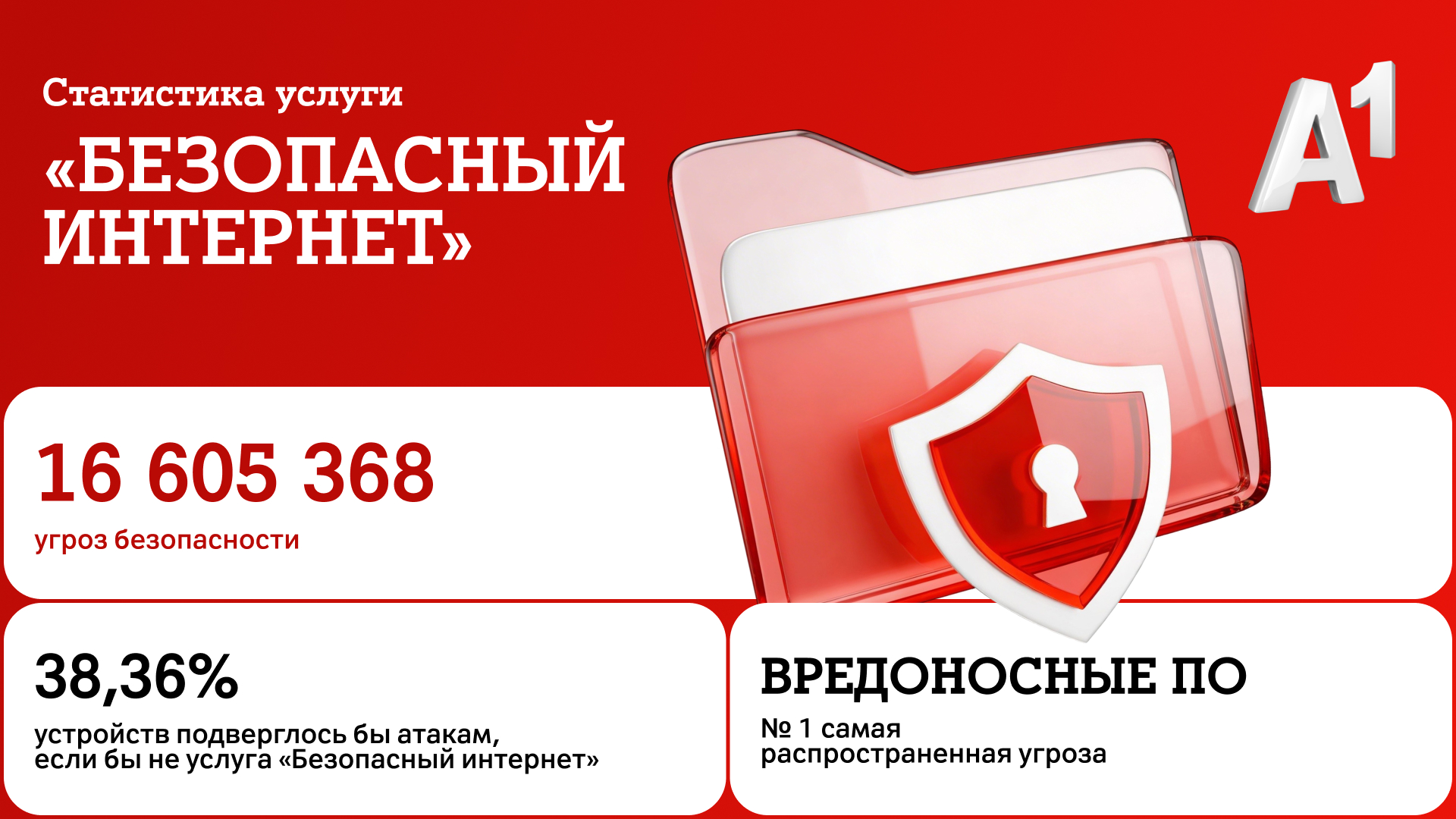
What are those threats? The statistics collected by "Safe Internet" are a reflection of global trends:
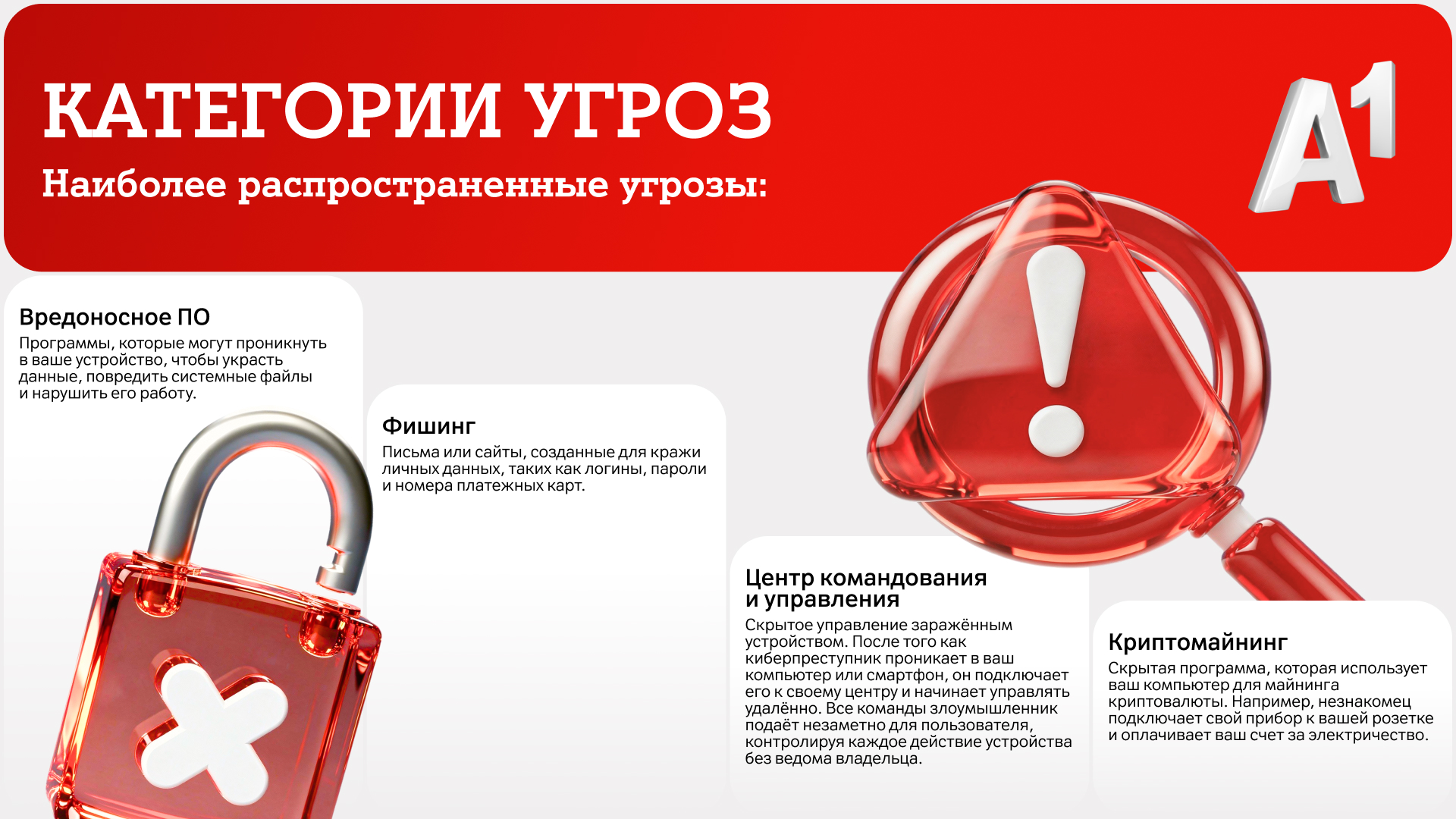
- 1st place – attempts to infect a victim's device with malware in order to gain unauthorized access to their personal data or take over their smartphone or PC;
- 2nd place – various phishing scams, e.g. stealing personal data via fake websites, emails, or messages;
- 3rd place – exposure to malicious websites and other platforms.
"Safe Internet" is a fireproof service that protects A1 customers from unsafe websites, scams, and intrusive ads.
- The tool automatically blocks malicious sites, suspicious links, and spam before the user may access them.
- On top of that, you can restrict access to games, videos, music, and social platforms, or completely ban adult, criminal or other unwanted content.
- You can set up your own schedule, e.g. allow the use of specific apps or sites only during specific hours or on specific days.
- Plus, you can whitelist or blacklist different sites, and block unwanted apps and services.
- The service also allows you to check your email address and phone number for data leaks. You can find out what data were breached, as well as when and where it occurred.
- The tool collects stats on attempts to access unsafe sites and provides regular Monday reports.
How does it work in everyday life? Let's say you're a parent who doesn't want their kid to play video games at night and watch unsafe content. The "Safe Internet" service will keep all games and social media platforms blocked during the specified hours, while keeping track of all attempts to access the banned sites. Your child won't be able to visit any of the blacklisted resources. Or let's say you're fed up with intrusive ads and worry that you may click on a malicious banner. The tool will block pop-up ads and prevent any attempts to access unsafe sites, protecting you from scams. Every time you try to access a suspicious site, you be getting an immediate notification. And if there is a data leak on a site that you're using, the "Safe Internet" tool will tell you if your data have been exposed and what you need to do.
Furthermore, the new solution by A1 can effectively track and prevent other types of threats, e.g. it can spot if your device is being used for crypto mining.
"Safe Internet" is not just another free antivirus that clutters your smartphone. It's a true pro in protecting you from most digital threats and online scams. Installing and activating the service takes just a few clicks on any device. There is no need to install other apps or programs!
To activate the "Safe Internet" service and start a free trial, log into the My A1 app or your personal account on the A1 website.
Key rules to protect yourself:
- Awareness. News on cyberattacks are emerging in Belarusian mass media with an alarming frequency. Staying updated on the most popular types of scams – whether the latest or time-tested ones – can make you more cautious when it comes to browsing the Internet and answering calls from unknown numbers.
- Share information. Your kids or elderly relatives may be less aware of cyberthreats. Therefore, it's important to talk to them about the latest online scams. The #Take5Seconds campaign is keeping a regularly updated list of online threats and scams that you may find useful.
- Extra help. Sadly, everyone has a chink in the armor, and even cybersecurity pros are not immune to accidentally clicking on links or making random mistakes. This is where dedicated tools – such as the "Safe Internet" solution by A1– can be extremely helpful.
During its first year, "Safe Internet" has managed to prove that governments and big companies with a host of cybersecurity professionals are not the only ones who can handle digital threats. Each one of us can defend themselves and their loves ones. The more numerous we are, the more effectively can we deflect cyberattacks.